History
1973–1979
Cinema Zoo
The beginnings of the Palm Theatre go back to 1973, when Cal Poly students Jim Dee and Paul Karlen began presenting short and feature-length films under the banner of the San Luis Obispo Zoopraxographical Film Society, better known as Cinema Zoo.
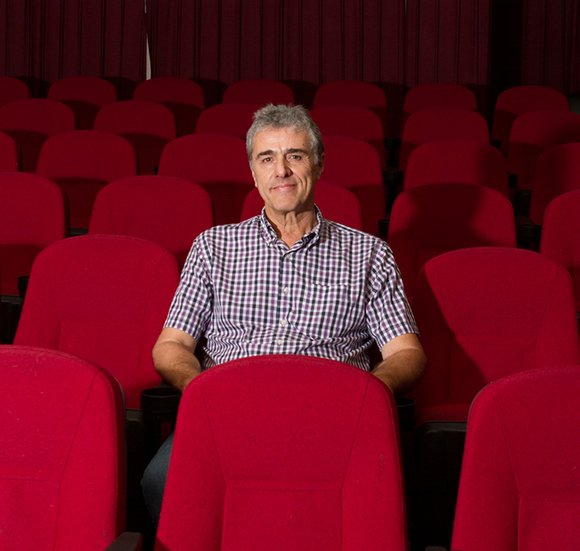
“There’s a lot of amazing cinema out there beyond the multiplex.”
Using a 16mm projector, they rented spaces around San Luis Obispo and generally charged 75 cents for admission. 1 The programs ranged from cartoons and international shorts to films by Roger Corman and Ingmar Bergman. Each screening was accompanied by a unique silk-screened poster created by Karlen. In January 2013, the San Luis Obispo Museum of Art presented an exhibition of Cinema Zoo posters created between 1973 and 1976. The society’s full name referred to the Zoopraxographical Hall in Chicago, described as the world’s first moving-image theatre when it opened in 1893.
Cinema Zoo briefly returned in 1976 as part of the Savannah Dinner Theater at 967 Osos Street. Film screenings alternated with live performances, but the enterprise lasted only one year and the Cinema Zoo name was retired.
1979–1989
Rainbow Theatre
In 1979, Jim and Patty Dee returned to the former Savannah Dinner Theater space at 967 Osos Street and opened the Rainbow Theatre, a 160-seat, single-screen cinema inside San Luis Obispo’s historic J. P. Andrews building.
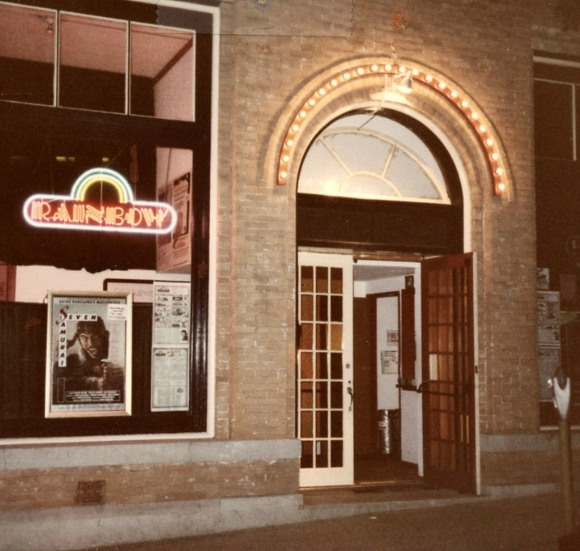
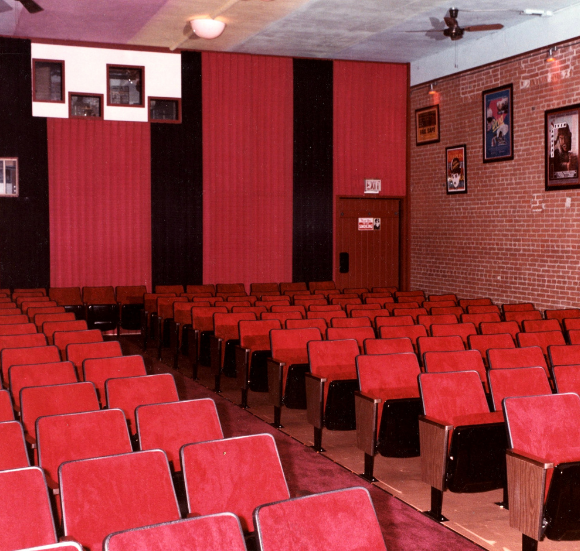
It became San Luis Obispo’s first dedicated art-house movie theatre. The Rainbow offered an ambitious mixture of first-run foreign and domestic films, classics, midnight favorites, creative double features and occasional live events. Its first film was Franco Zeffirelli’s ROMEO AND JULIET. Its final program paired HAROLD AND MAUDE with KING OF HEARTS. The theatre’s programming expanded the range of films available on the Central Coast and developed a loyal audience, including patrons who traveled from Los Angeles and San Francisco. Monday Bargain Night also became a local tradition, with audiences sometimes arriving without checking the program and trusting the Rainbow’s selection. 3
“Patrons would slap two-bucks down and ask ‘what’s showing?’”
Following the Rainbow’s success, the Dees began looking for a way to add more screens. They opened the Palm Theatre in 1988 and briefly operated both locations. The costs of remodeling and operating the Palm, combined with slower business, led to the Rainbow’s closure in July 1989. 3
1988–2024
Palm Theatre
In March 1988, the Dees took over the former California Employment Development Department building at 817 Palm Street in San Luis Obispo’s historic Chinatown.
The open government office had not been designed as a cinema, requiring the construction of auditoriums and sloped floors. 4 The major remodel created two screens and three private office spaces. The Palm Theatre opened in August 1988 while the Dees continued operating the Rainbow nearby. The Palm’s first five years were challenging. Some longtime Rainbow patrons considered the new building less inviting than the Rainbow’s exposed-brick interior. Audience support grew through long-running engagements. SHIRLEY VALENTINE played for 20 consecutive weeks, while AMÉLIE later became the Palm’s longest-running film with an engagement of more than 32 weeks. In 1993, the three office spaces were removed to create a third auditorium. The expansion and the successful engagement of THE CRYING GAME marked an important financial turning point for the theatre. 3
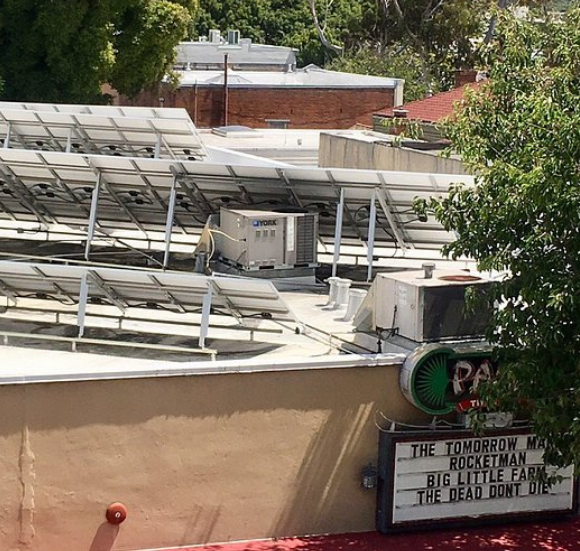
The Palm remained a small, independently operated alternative to the multiplexes, presenting independent, international and documentary films while maintaining comparatively affordable tickets and concessions. 35 In 2004, the Palm installed its first 80 photovoltaic solar modules, becoming the first solar-powered movie theatre in the United States. An additional 18 modules were later added, bringing the total to 98. 36 The system generated electricity during the day and fed it into the Pacific Gas and Electric grid. The theatre’s monthly electric costs fell from approximately $1,200–$1,500 to less than $100. A reflective white roof also reduced the building’s need for air conditioning. 6 In 2012 and 2013, the Palm converted all three auditoriums to digital projection and 5.1 Dolby sound, retiring 35mm. 3
The Palm celebrated its 35th anniversary in August 2023. By then, it was San Luis Obispo County’s last independent art-house cinema and was confronting declining attendance, streaming competition and the continuing effects of the pandemic. 7
2024–Present
SLO Film Center
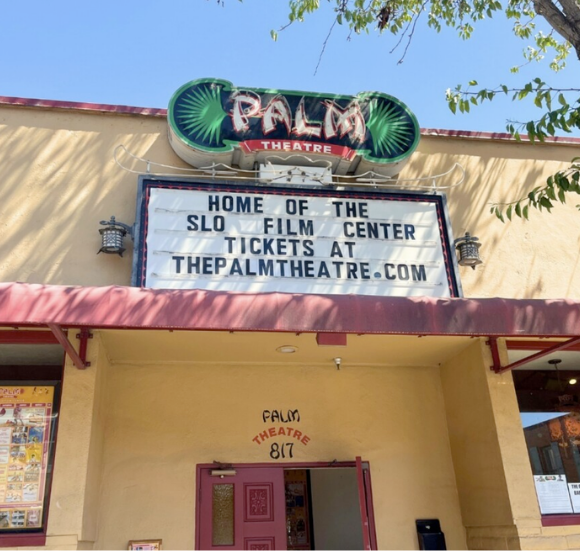
On July 1, 2024, the Palm Theatre began a new chapter.
“We’ve put a lot of thought into the transition and making sure that we still have the things that the community expects about the Palm.”
Jim and Patty Dee retired from operating the theatre, while the nonprofit San Luis Obispo International Film Festival assumed responsibility for its programming and operations. The Dees retain ownership of the building and lease it to the festival. The transition establishes a nonprofit, year-round film center intended to preserve the Palm while expanding its role for local audiences, filmmakers and students. The SLO Film Center retains familiar elements of the Palm, including affordable prices, its fan-favorite method of making popcorn and members of its longtime staff. The nonprofit model also creates opportunities for expanded programming, including guest speakers, filmmaker panels, Q&A’s, educational events, live music and year-round festival programming. 48
The SLO Film Center gives the San Luis Obispo International Film Festival a permanent home while continuing the programming tradition established by Cinema Zoo, the Rainbow Theatre and the Palm. 48
Sources
- [1] New Times San Luis Obispo. SLO County Cinema Operators Innovate to Make Ends Meet.
- [2] Mustang News. Palm Theatre: Where Curiosity Meets Cinema.
- [3] PBS SoCal, Artbound. The Palm Theatre and the Man Behind the Reel.
- [4] KCBX. From Indie Gem to Cultural Hub: The Palm Theatre Has a New Identity as the Film Center.
- [5] Los Angeles Times. Art of Survival at the Art House.
- [6] Mustang News. Solar-Powered Silver Screen.
- [7] SFGATE. ‘I’ve Had a Fantastic Run’: The Last Indie Theater in One California County.
- [8] SLO Review. SLO Film Center Debuts.